


Knee pain is a widespread symptom that signals trouble in the body - the occurrence of joint disease or simply increased load on the legs.
It is difficult to find a person who has never experienced pain in the knees at a certain period of life.Discomfort, clicking or pain of varying intensity in the knee joints occurs in both adults and children due to many reasons.The older a person gets, the higher the likelihood of developing various diseases, the first sign of which is pain in the knees.This occurs due to the age-related characteristics of the body: a slowdown in metabolic processes, wear and tear of the cartilage tissue of the joints, and the addition of other problems with the musculoskeletal system, blood vessels, and nerves.
Due to the complex anatomical structure, multiple structures and significant loads experienced, and often overloads, the knee joints are very vulnerable.Damage to any element of the structure, for example, the synovial bursa, leads to impaired motor function of the knee and, accordingly, pain.Ligaments and menisci are considered the most vulnerable; they are injured in 80–85% of cases.
Anatomical structure of the knee
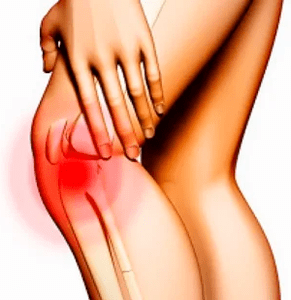
The knee consists of the knee joint, the distal end of the femur with two condyles and subcondyles, the tibia, muscles, nerves, blood vessels, ligaments, patella (patella), joint capsules and menisci.
The knee joint is one of the large joints of the body.The femur approaches it from above.The articular surfaces of its lateral (outer) and medial (inner) condyles articulate with the patella and tibia.Menisci, which are connective tissue cartilage, serve as shock absorbers of the joint.Thanks to them, there is a rational distribution of a person’s weight on the tibial plateau and increases the stability of the joint.The gracilis, biceps, semimembranosus and other muscles synchronize the capsular-ligamentous structures, providing motor activity of the knee joint.
The elements of the knee are connected to each other by many ligaments.There are two cruciate ligaments inside the joint - posterior and anterior.The axillae of the femur are connected to the fibula and tibia by collateral ligaments.The oblique popliteal ligament is located at the back of the bursa of the knee joint.From a number of articular cavities, the main one is isolated - the synovial capsule, which does not communicate with the joint.The blood supply to the elements of the knee is carried out through a network of blood vessels, and the innervation is carried out by nerve fibers.
Causes of knee pain
There are many causes of pain in the knee joints, which can be divided into several groups.
Traumatic lesions of the knee elements:
- Knee bruise.As a result of vascular rupture, local hemorrhage occurs in the soft tissues of the joint.Redness, swelling, damage to nerve endings leads to pain and difficulty moving.
- Complete or partial ligament rupture.More often, a partial violation of the integrity of the internal collateral ligament is diagnosed, resulting from excessive eversion of the tibia.
The external ligament ruptures less frequently than the internal ligament.This occurs due to a strong inward deviation of the shin, when twisting the leg, for example.Rupture of the cruciate ligaments is inevitably accompanied by hemarthrosis.
Complete rupture of both ligaments is often combined with damage to the joint capsule and rupture of the internal meniscus.Such an injury leads to excessive mobility of the knee joint, accompanied by severe pain, the intensity of which depends on the degree of the tear.
- Hemarthrosis of the knee joint - bleeding into the joint cavity.It can be traumatic or non-traumatic.Traumatic hemarthrosis is observed with meniscal tears, complete or incomplete ligament ruptures, intra-articular fractures, and bruises of the knee area.The non-traumatic option is one of the symptoms of diseases characterized by increased fragility of the walls of blood vessels or a violation of the blood coagulation system.These include hemophilia, scurvy, and severe forms of hemorrhagic diathesis.The blood accumulated in the joint cavity compresses the tissues, disrupting blood circulation in them.A special pigment - hemosiderin - negatively affects ligaments, hyaline cartilage, and synovial bursa, leading to a loss of their elasticity.The result of damage to the articular bursa is the swelling of its villi and increased production of joint fluid.The result of repeated hemorrhages is degeneration and destruction of the joint.
- Knee meniscopathy – violation of the integrity of the menisci of the knee joint.In the lateral form, the external meniscus is damaged, in the medial form, the internal one is damaged.This is one of the most common, but difficult to diagnose injuries of the knee joint.Not only athletes engaged in intense training, but also ordinary people are at risk of the disease.A meniscus tear can occur from a sudden unusual movement when turning the body, twisting a leg, or a strong blow to the knee.
- Patella luxation – pathological displacement of the patella.Trauma is diagnosed in no more than 0.7% of cases of the total number of dislocations.More often external dislocation occurs, less often - internal, very rarely - vertical or torsion.In case of incomplete dislocation, the patella is located above the lateral (outer) condyle, in case of complete dislocation, it is located outside the lateral condyle.
- Closed or open fractures of the knee joint, the upper part of the leg bones or the lower part of the femur. Such injuries are often combined with damage to the soft tissues of the knee, causing massive hemorrhages, excessive mobility in the knee area, and its deformation.
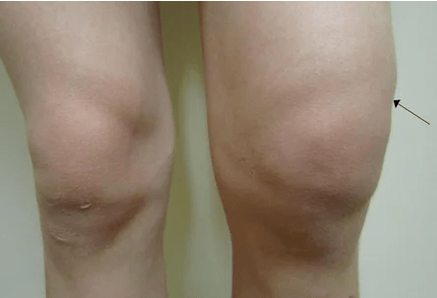
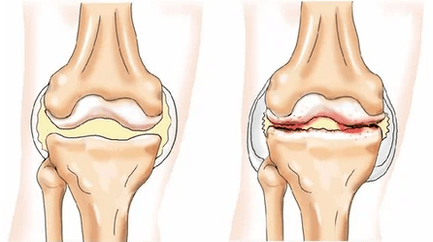
Inflammatory and degenerative-dystrophic diseases of the articular elements of the knee:
- Arthritis – inflammatory lesion of the knee joint.A similar mechanism for the development of pathology is observed in osteoarthritis, ankylosing spondylitis, rheumatoid arthritis, and gout (with the deposition of urate in the joints).
- Osteoarthrosis (gonarthrosis) with damage to the knee joint of a non-inflammatory nature, affecting all its structures and leading to serious degenerative changes.
- Bursitis with inflammation of the synovial bursae leads to pain during flexion-extension movements in the knee.
- Periarthritis of the knee tendons – inflammation of the pes anserine capsule, knee tendons, as well as the muscles and ligaments surrounding the joint.In this case, the pain occurs mainly during descent down the stairs, especially with a heavy load, and is concentrated on the inner surface of the knee.
- Patellar Chondropathy – degenerative-necrotic changes in the cartilage of the articular (posterior) surface of the patella.The degree of destruction can vary: from areas of slight softening to cracks and complete abrasion.
- Chondromatosis – a serious chronic disease caused by a dysplastic process with island degeneration of sections of the membrane of the articular membrane into cartilage – chondromas.Ossification of individual cartilaginous bodies is not excluded.
- Baker's cyst – the formation of a dense elastic round tumor-like formation in the popliteal fossa, located on the opposite side of the patella.The cyst is clearly visible when the knee is extended.Causes discomfort and pain in the popliteal region.When large in size, it compresses blood vessels and nerves, leading to disruption of innervation and blood circulation.
- Hoff's disease – a disease accompanied by damage and further degeneration of adipose tissue located around the knee joint.Pinching, swelling and other damage to fat cells - adipocytes - end with their replacement by dense fibrous tissue.As a result, the buffering function of the “fat cushion” is disrupted, and the adipose tissue itself becomes unable to act as a shock absorber.
- Osgood–Schlatter disease – a pathology characterized by necrosis of the tuberous part of the tibia.Diagnosed in adolescents from 10 to 18 years old who play sports.A painful lump appears below the patella, which, if left untreated, leads to limited movement of the leg or complete immobilization, as well as muscle wasting.
Diseases in which irradiation of pain in the knee area is possible:
- Coxarthrosis of the hip joint – chronic damage to the hip joint, accompanied by progressive degeneration and dystrophic changes in it.Often the pain extends down the outer thigh to the knee or below.
- Sciatic nerve neuropathy – non-inflammatory damage to the nerve as a result of compression or spasm of blood vessels.This nerve travels to the feet, starting in the lumbar region and passing through the tailbone and pelvis.A blockade at any one point along its length leads to impaired sensitivity or throbbing pain.
- Fibromyalgia – extra-articular non-inflammatory soft tissue damage with a combination of symptoms in the form of arthralgia, muscle weakness, depression, etc.
Some systemic diseases leading to knee pain:
- Osteoporosis – a chronically progressive disease of the skeletal system that changes the mineral composition and density of bone tissue.“Leaching” of calcium from bones leads to their fragility.The process is accompanied by aching or aching pain in the limbs.
- Tuberculosis of bones.Tuberculosis of a bone area leads to constant severe pain.
- Osteomyelitis – an infectious-inflammatory disease that affects all structural elements of bones.The result of both specific, for example, tuberculous, and nonspecific, more often coccal, osteomyelitis is skin hyperemia, swelling, local acute pain in the bones and muscles, and febrile temperature.
- Some infectious diseases.With Reiter's syndrome, in addition to involving the urogenital tract and the mucous membrane of the eyes, the joints are affected.One of the manifestations of Lyme disease is arthralgia.
Types of knee pain
Depending on the etiology, the nature and intensity of pain may vary.
- Aching.For arthritis, osteoarthritis.
- Sharp, strong.For fractures of knee elements, ligament rupture, acute bursitis, knee bruise, exacerbation of meniscopathy, deforming osteoarthritis.
- Pulsating.With advanced deforming arthrosis, meniscus injury.
- Drilling.With osteomyelitis.
- Dumb.For bursitis, chronic osteochondritis.
- Burning.With compression of the sciatic nerve, tuberculous process in the bone.
- Shooting. When a nerve trunk is pinched.
- Pain when walking.For Baker's cyst, bursitis, arthritis, gonarthrosis, periarthritis.
- Pain at rest. For gout, arthritis.
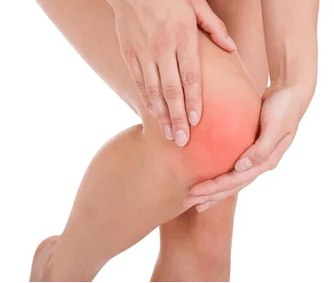
Diagnosis of pathologies causing knee pain
Physical examination:
- collection of medical history and complaints;
- visual inspection with palpation of the knee.
Laboratory research:
- biochemical and clinical blood tests;
- serological blood test;
- immunological blood test;
- rheumatological tests;
- bacteriological analysis of synovial fluid.
Invasive instrumental methods:
- arthroscopy;
- puncture of the joint capsule;
- puncture bone biopsy.
Non-invasive instrumental diagnostics:
- radiography of the knee joint;
- densitometry;
- ultrasound examination of the joint;
- MRI or CT.
Treatment for knee pain
If the pain in one or both knees is of a non-traumatic nature, then you should first contact a therapist who, based on the patient’s complaints and the results of an objective examination, will refer you to a specialist - an orthopedist, rheumatologist, phlebologist or neurologist.For any knee injury, you must consult a surgeon or orthopedic traumatologist.
Treatment is different in each case and depends on the cause of the pain, that is, on the type of injury or disease.Each disease has its own treatment regimen.But first, the patient must follow several general rules:
- significantly reduce the amount of walking and standing during the day;
- athletes should temporarily (until recovery) stop training, and ordinary people should stop running or jumping;
- if the pain intensifies, completely stop moving and apply a fixing bandage made of an elastic bandage to the knee;
- wear a brace or bandage to immobilize the knee joint;
- in case of injury, apply cold to the site of injury.
Rheumatoid, psoriatic arthritis, and systemic autoimmune diseases require serious complex treatment carried out over many months.Basic therapy consists of immunosuppressants, non-steroidal anti-inflammatory and hormonal drugs, gold preparations, etc.
Painkillers and anti-inflammatory medications are used to treat bursitis.If an infection is detected, then a course of antibiotics.Therapeutic puncture of the bursa is performed to remove excess fluid from the synovial cavity and/or administer one of the corticosteroids.Chronic inflammation of the bursa can be eliminated by surgery - surgical excision of the synovial bursa.
For deforming osteoarthritis, intra-articular injections of glucocorticosteroids, long-term use of NSAIDs and chondroprotectors are effective.To relieve pain, compresses with dimexide or bischofite, ointments and gels with an anti-inflammatory effect are prescribed locally.Massage, physiotherapy, therapeutic exercises help.Severe lesions of the knee joint require surgical intervention - joint replacement.
Treatment of osteoporosis consists of a course of taking bisphosphonates, calcitonins, calcium supplements, vitamin D, etc.
Treatment for a torn meniscus can be conservative or surgical.Conservative therapy consists of the use of analgesics, NSAIDs, hyaluronic acid, and chondroprotectors.But first, the joint is repositioned.
Types of surgical intervention:
- meniscectomy;
- partial (incomplete) meniscectomy;
- meniscus transplantation;
- arthroscopy;
- arthroscopic suturing of a meniscus tear.
For any knee injury after treatment, the rehabilitation period is very important, which should take place under the supervision of a rehabilitation specialist or orthopedist.The doctor will create an optimal program for restoring joint function.The main methods of postoperative rehabilitation are massage and therapeutic exercises.Exercises on special simulators are also effective, gradually developing the knee joint.